The Timeless Tradition of Genshin Impact Livestream Codes: A Tale of Primogems and Patience
In 2026, Genshin Impact livestream codes still reward Primogems through a fusion of traditional redemption and modern tech.
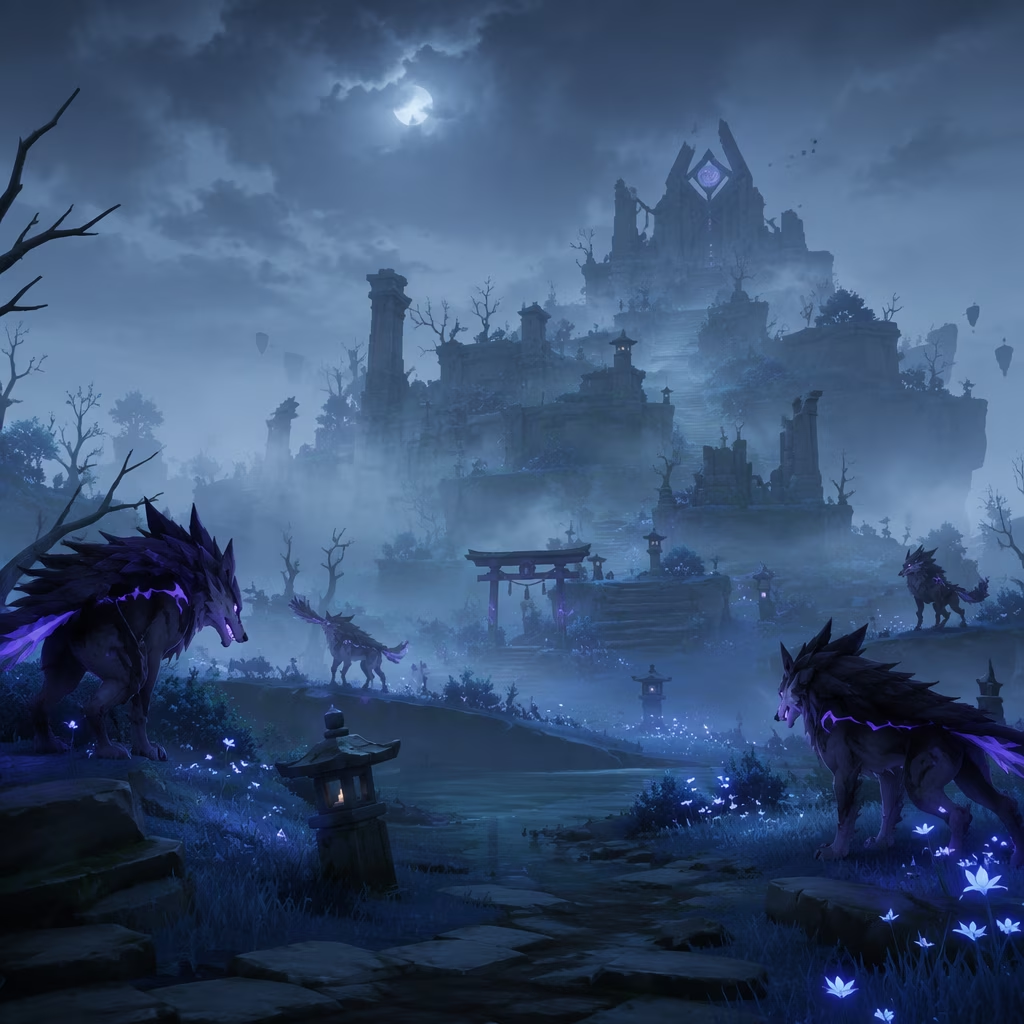
It was a chilly January evening in 2026 when a veteran Traveler named Kael sat cross-legged on his couch, smart-glasses resting on his nose as he tuned into the latest Genshin Impact version 9.2 preview. The familiar sound of the host’s voice washed over him, but his fingers hovered expectantly over a holographic keyboard—ready to snatch the fleeting codes that would appear on screen. Nine years had passed since the launch of Teyvat’s grand adventure, yet the ritual remained largely unchanged: three alphanumeric keys, each worth a handful of Primogems and other trinkets, flashing up like ephemeral fireflies that flicker for only a day before vanishing into the digital ether. This ritual, which began in the earliest days of the game, had evolved from simple text posts on forums into a global event synchronized across social media feeds, smartwatch alerts, and augmented-reality overlays. And still, players chased those codes with the same fervor as the first generation of Travelers.
The story of these livestream codes is one of quiet generosity woven into the fabric of live-service gaming. HoYoverse, the visionary developer behind Genshin Impact, first introduced the practice as a way to reward viewers who tuned into the bi-monthly version preview broadcasts. Back in version 3.4, during the early 2020s, the arrival of Alhaitham and Yao Yao had the community buzzing—much like the tension in a potter’s kiln as the glaze begins to melt and transform the ordinary into something brilliant. Three codes dropped that day, each a small treasure: NS8TUVJYR4UH (100 Primogems and ten Mystic Enhancement Ore), NSQTVCKYRMDM (100 Primogems and five Hero’s Wit), and LB8SDUJYQ4V9 (100 Primogems and 50,000 Mora). Those combinations have long since expired, becoming mere footprints in the sands of Genshin’s history, but for the travelers of that era, they were like seeds planted in a garden that would later bloom into a five-star character. Even now, veteran players occasionally reminisce about the brevity of those codes and the frantic typing competition that ensued.
To understand the impact of such a seemingly small gesture, one must look at the economy of Teyvat. For the no-spend player, Primogems are hoarded like stardust in a cosmic hourglass—each grain a step toward the next wish, each wish a prayer for a new ally. Daily commissions, limited-time events, and the occasional chest provide a steady trickle, but the livestream codes act as a sudden rain shower in an otherwise manageable drought. The three codes from that version-3.4 broadcast, for example, bestowed 300 Primogems collectively—not enough to guarantee a five-star pull, yet enough to tilt the scales of hope. As Kael often reflected, acquiring Primogems without spending real money was akin to nurturing a bonsai tree: one must trim, water, and wait with infinite patience, celebrating every tiny sprout of progress.
How does one redeem these temporal gifts? The process has seen refinements over the years, but the core methods remain accessible. Back when Kael first started, there were two paths: one through the official website and another directly in the game. On a 2026-era device, the interface might shimmer with neural-touch feedback, but the steps still echoed that original design. First, navigate to the HoYoverse redemption portal—now accessible instantly by scanning a retina-synced QR code embedded in the livestream—or open the Genshin Impact client and tap through to the account settings. There, in a digital alcove labeled “Redeem Code,” the player enters the fleeting string of characters. A soft chime confirms acceptance, and the rewards are dispatched to the in-game mailbox, where they glint like unopened letters from a friend. The only hard gate has always been Adventure Rank 10, a bar so low that even the most casual wayfarer clears it within a few days of exploring Mondstadt’s rolling hills.
The ephemeral nature of these codes—most expire within 24 hours—imbues them with a sense of urgency that belies their modest contents. During those early years, players like Kael would set alarms, join community Discord servers, and even share tips through voice channels as soon as a code appeared. The fleeting existence of a livestream code is reminiscent of a frost flower blooming on a high mountain windowpane: exquisite, brief, and entirely dependent on perfect timing. Miss it, and you’re left staring at a blank pane, replaying the VOD in vain hope of spotting a missed sequence. Yet the community always banded together, reposting codes on social platforms and creating guides to ensure no one was left behind. This culture of mutual aid turned a simple promotional gimmick into a heartbeat of the player base.
As the game marches into its second decade, the tradition persists. The codes have grown to sometimes include fragile resin, artifact leveling materials, or even exclusive furnishings, but the core love affair with Primogems remains unshaken. In version 9.2, for instance, the codes rewarded a total of 350 Primogems and a rare teapot blueprint, but veterans still debate which era’s rewards felt most generous. What never changes is the ritual: the watchful eyes, the copied text, the swift redemption, and the quiet satisfaction of claiming a tiny victory against the gacha odds. The livestream code is not just a transaction; it is a shared moment across millions of screens, a collective breath held and released, a reminder that even in a vast, ever-expanding world like Teyvat, the simplest acts of kindness—from developer to player, and player to player—spark the brightest constellations.
Kael, now an old-timer in the community with a roster of over 80 characters, still finds himself grinning when a new code flashes on his display. He leans back, watches the rewards materialize in his mailbox, and murmurs a silent thanks to the developers who understood that joy can be packaged in twelve characters and a countdown clock. For him and for millions of others, the livestream code is more than free currency; it’s a thread connecting the early dawn of the game to the high noon of its enduring legacy.
Comments