Revisiting the Legend of the Vagabond Sword: A Tell-All Guide from a Day One Traveler
Genshin Impact's Legend of the Vagabond Sword event offered intense combat challenges and nostalgic rewards for veteran players.
You know that feeling when you stumble upon an old event page in Genshin Impact and the memories just flood back? That’s exactly what happened to me the other day. I was going through my namecard collection and spotted “Celebration: Battlesong” – instantly I was transported back to version 1.6, sweating over the Legend of the Vagabond Sword domain challenge. Even though it’s 2026 now, I still get questions from newer players about how these older combat events worked, so I thought I’d break it all down for you with the wisdom of hindsight.
First off, the Legend of the Vagabond Sword was no walk in Liyue’s park. It ran during the second half of the 1.6 update, right when everyone was still buzzing about the summer islands. But here’s the twist: this event didn’t take place on the shiny archipelago. It was a pure domain challenge – you teleported in, set your difficulty, and went head-to-head with some of the meanest bosses the game had to offer at the time. No fluffy mini-games, no waveriders, just raw combat.
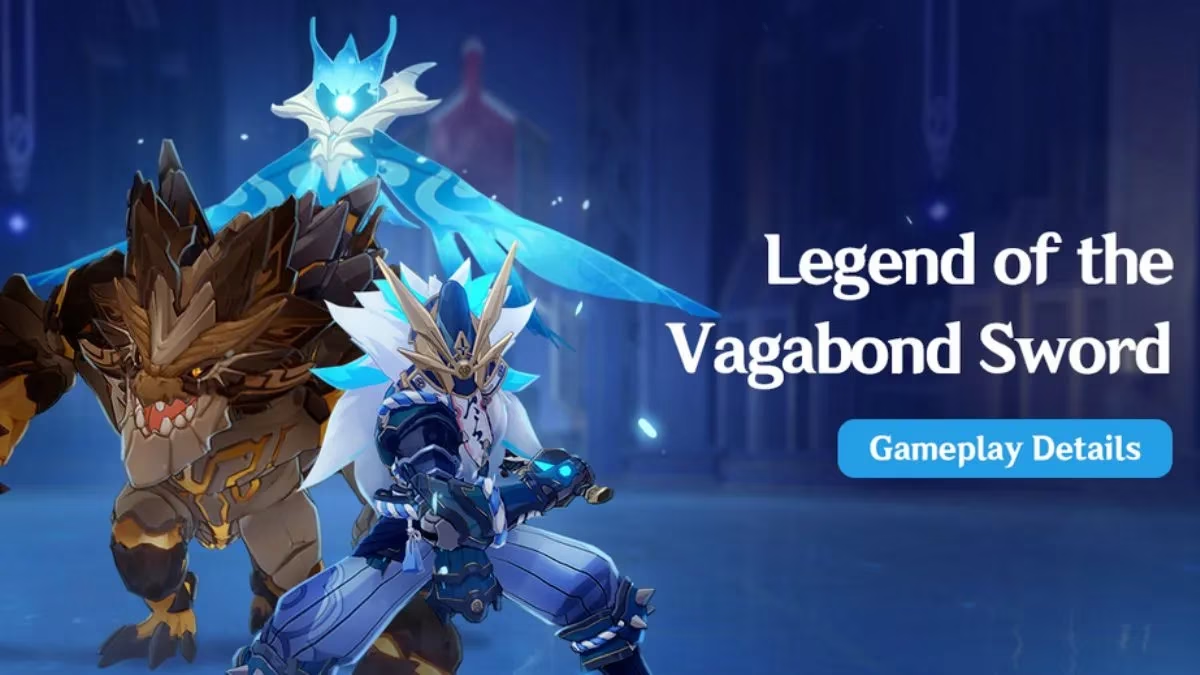
To even access this gauntlet, you needed Adventure Rank 20 or above, which is laughably low by today’s standards, but back then it still filtered out the absolute beginners. I remember rushing a friend to AR20 just so we could co-op it. Yes, co-op and solo were both available, and trust me, tackling the Dual Maguu Kenki with a random matchmaking squad in 2021 was an adventure in itself. The event dropped on June 25 and a new challenge stage unlocked every single day for seven days straight. That drip-feed kept me logging in at reset, itching to see what nightmare waited next.
Now, the structure was what made it so replayable. Before you dove into a fight, you could tweak two things: the difficulty level and something called Flairs. Flairs were special combat modifiers that made enemies tougher and buffed them in specific ways, but picking them added multipliers to your score. It was a risk-reward balancing act. Do I take the flair that makes the Oceanid summons explode on death? Sure, for an extra 25% score. Do I also increase the boss’s HP by 100%? Absolutely not, my Diluc was still rocking a four-star claymore. The total points you earned combined your high scores from all stages, and the goal was to push that number as high as possible to claim rewards.
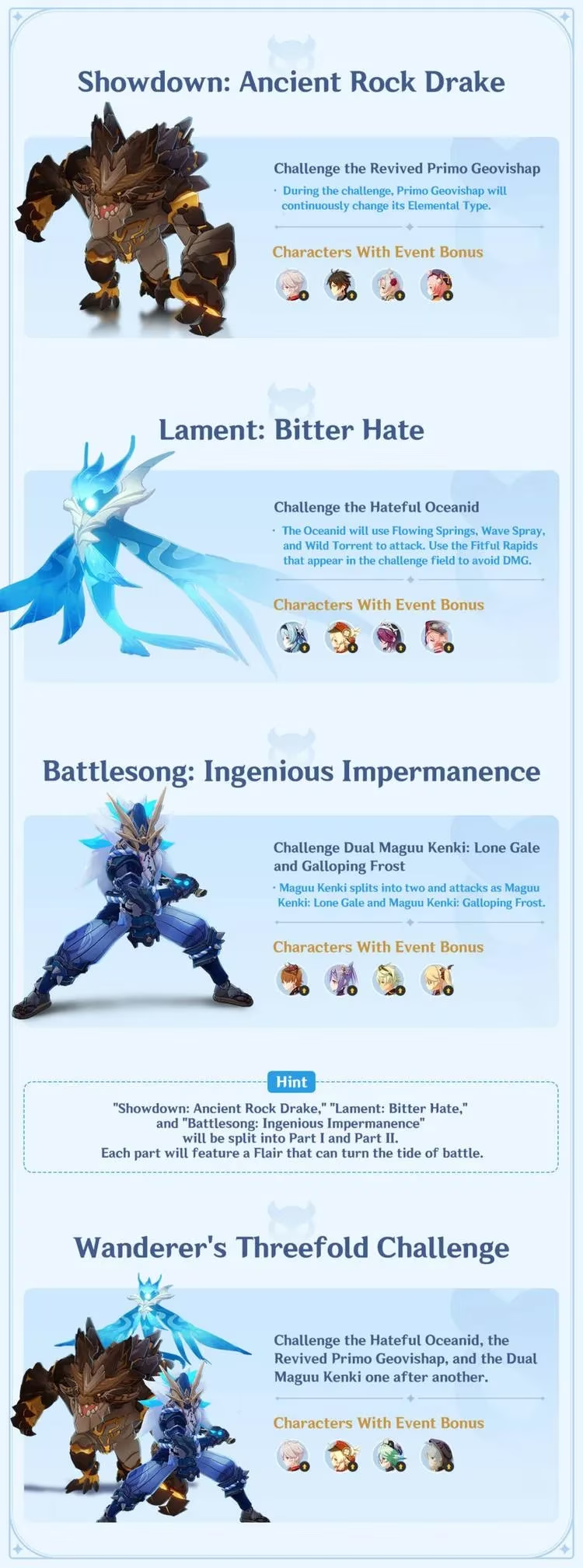
Let’s talk about those three main bosses, because they were the real stars – or villains – of the show.
-
The Hateful Oceanid: Not the Rhodeia we were used to, but a nastier variant with faster hydro mimics and those decimating water bombs. My first clear was a mess of frozen characters and desperation.
-
Revived Primo Geovishap: This was the version that shifted elements, forcing you to bring a shielder or eat a massive counterattack. I learned very quickly that Noelle was a lifesafer here.
-
Dual Maguu Kenki: Two of them. At once. Their phantom slashes overlapped in ways that deleted your health bar. If you didn’t have a strong healer and crowd control, it was pure chaos.
What kept me going was the reward table, which was actually very generous for a combat event. Your total combined score unlocked a bunch of goodies, and I’m not just talking about primogems (though we all want those). The crown jewel for many of us was the exclusive namecard style “Celebration: Battlesong.” I still see it equipped on veteran profiles today, a tiny badge of honor from a bygone era. The other rewards included:
| Score Threshold | Notable Rewards |
|---|---|
| First clear per stage | 60 Primogems |
| Cumulative milestones | Hero’s Wit, Talent Level-Up Materials, Mora, Mystic Enhancement Ore |
| Final milestone | Namecard: “Celebration: Battlesong” |
And here’s a pro tip that still applies to many recurring events: the Battle Pass EXP from the specially added missions didn’t cap your weekly limit. So you could farm that extra BP experience without eating into your 10,000 weekly cap. For a F2P player like me back then, squeezing every bit of value out of the Battle Pass was essential.
One thing I deeply appreciated was how the high score system worked. If you replayed a stage and scored lower, your old high score remained untouched. Only a better run would push it up. This meant you could experiment with different teams and flairs without penalty, which encouraged a lot of late-event tinkering. I spent an entire weekend trying to shave seconds off my Geovishap kill just to squeeze onto the leaderboard in my friend group. The total score was simply the sum of your best runs on each stage, so consistency mattered, but one brilliant fluke could make the difference.
Looking back from 2026, it’s wild to see how much the game’s event design has evolved. Vagabond Sword was a testbed for the high-difficulty domain challenges we now get regularly, like the energy amplifier events or the more recent boss-rush tournaments. It taught me the value of building versatile supports and investing in shields, lessons that are still etched into my playstyle. If I could whisper advice to my past self from this future spot, it’d be: level up your Bennett and don’t sleep on Diona. Seriously.
So whether you’re a nostalgic veteran or a curious new player peeking at Teyvat’s history, the Legend of the Vagabond Sword remains a milestone. The primogems are long claimed, but the stories and the namecard live on. If you ever see that battlesong card in a co-op domain, give a little nod. We know what it took.
Comments