My Thoughts on Genshin Impact's Future in 2026: Facing Challenges from Within
Genshin Impact's evolution and internal competition from HoYoverse siblings like Honkai: Star Rail are reshaping the 2026 live-service landscape, highlighting player fatigue and shifting dynamics.
As a dedicated player since the early days, I've been reflecting a lot on Genshin Impact's journey as we head deeper into 2026. It's been quite a ride, hasn't it? From its explosive launch that captivated millions with its breathtaking open world inspired by Breath of the Wild, to becoming a cultural phenomenon, Genshin truly reshaped the live-service gaming landscape. Yet, here we are, several years later, and I can't help but feel the winds are shifting. The game's own family, HoYoverse's newer titles, have created a fascinating internal dynamic that feels both collaborative and competitive.
The Rise of the Siblings: Star Rail and Beyond
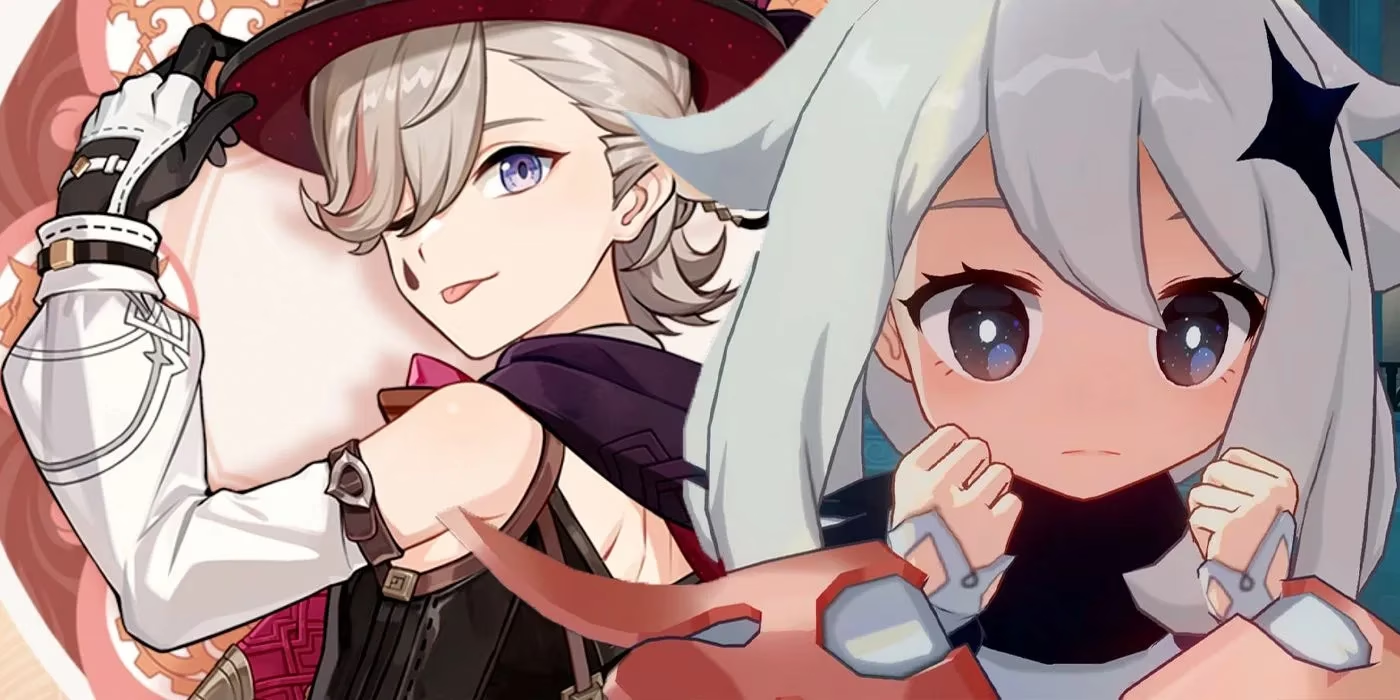
When Honkai: Star Rail launched, I, like many, was excited to dive into HoYoverse's next world. It felt familiar yet fresh. The turn-based combat, the sci-fi setting, the charismatic characters—it was all there. And let's be honest, that gacha system felt like coming home, just with a different coat of paint. Its success was immediate and massive, proving HoYoverse wasn't a one-hit wonder. But this success story had an interesting side effect for us, the players. Suddenly, my gaming time and, let's face it, my wallet, had to be split. I found myself asking: Do I do my dailies in Teyvat today, or tackle the new Simulated Universe in Star Rail? This internal competition became very real.
What made Star Rail particularly appealing, especially for a mobile-first player like myself, were some key quality-of-life features Genshin was (and honestly, in 2026, still sometimes is) lacking. The ability to farm any material on any day of the week was a game-changer. No more waiting for "It's Tuesday, so I guess I'm farming Talent books" 😅. Star Rail's more condensed maps and its turn-based system felt tailor-made for quick sessions on my phone, which is how I play 80% of the time. This highlighted areas where Genshin, as the older sibling, was starting to show its age.
The Content Lull and Player Fatigue
I remember the lead-up to the original 4.0 update vividly. Patches 3.7 and 3.8 felt... light. Really light. We got a single new four-star character across two whole updates! For a game built on constant new content and character hype, that was a noticeable drought. As someone who had been playing for years at that point, it was the first time I genuinely felt the grind wearing me down. The artifact farming felt more tedious, the repetitive events less engaging. This burnout wasn't unique to me; my entire friends list saw a dip in activity. And into that void stepped Star Rail, shiny, new, and full of things to do. It was the perfect storm for player attrition.

Fontaine's release in 4.0 was more than just a new region; it was a test. A test to see if Genshin could win back the attention and time of players who had wandered off to the Herta Space Station or were anticipating Zenless Zone Zero. It felt like the game's first true checkpoint for longevity. Could it still deliver that magical sense of discovery and wonder that hooked us all in 2020? Looking back from 2026, that update cycle set a precedent. We now see how HoYoverse strategically staggers content between its games, but it's a balancing act. Few of us have the time or mental bandwidth to be fully invested in multiple live-service gacha games simultaneously.
HoYoverse vs. HoYoverse: The Internal Struggle
This is the core paradox. HoYoverse's greatest strength—its ability to create multiple high-quality, successful games—is also a unique challenge for Genshin Impact. They are essentially competing with themselves. The audience overlap is enormous. We're the same players! So when a major update drops in Star Rail or when ZZZ finally launched, Genshin's engagement metrics naturally take a hit. Some of my friends made a full-time switch and never looked back, even with the allure of Natlan and Snezhnaya on the horizon.
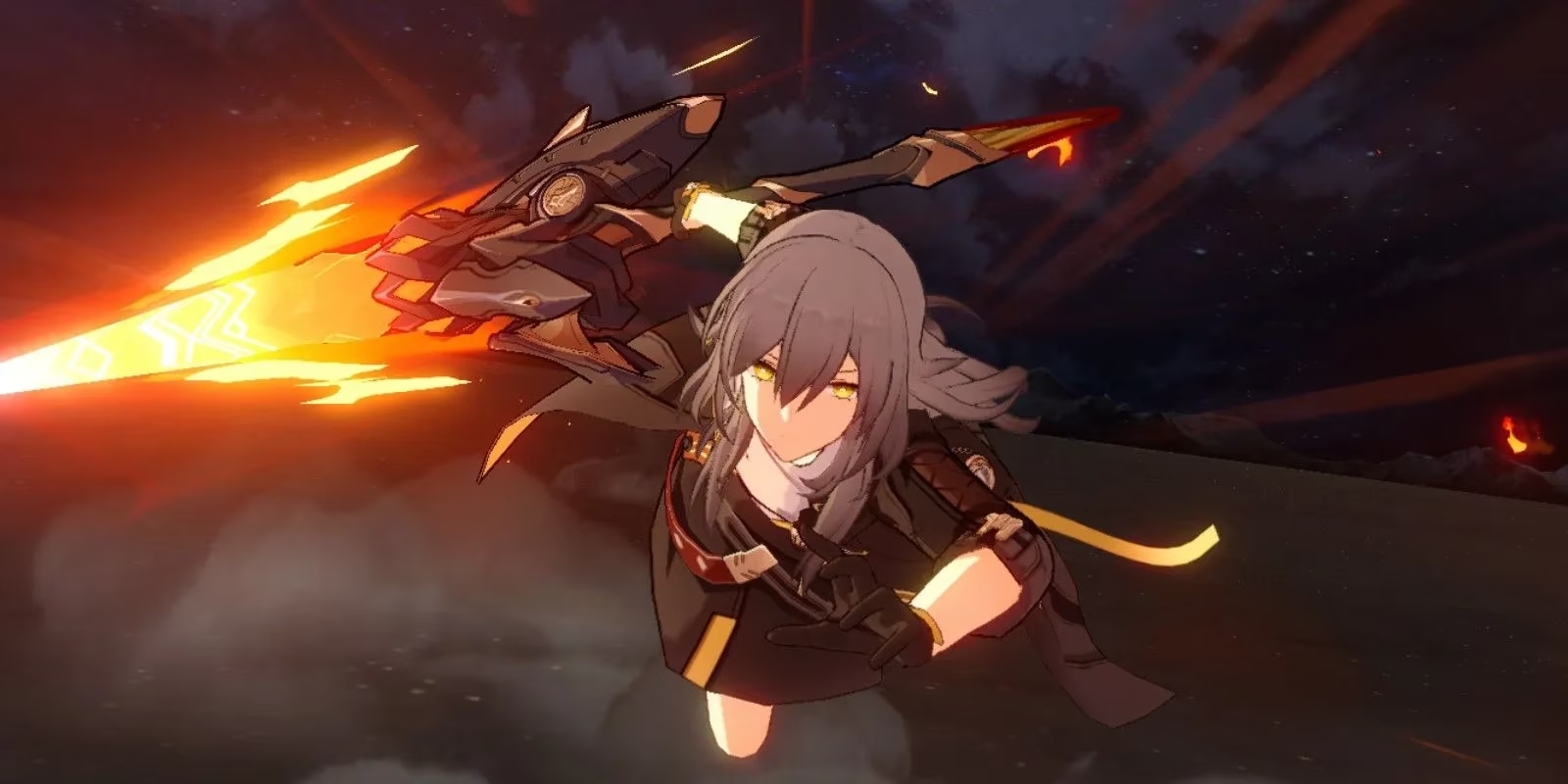
Yet, to declare Genshin in trouble would be a massive overstatement. It possesses inherent, colossal advantages that its siblings can't easily replicate:
-
The First-Mover Advantage & Scale: Genshin is a behemoth. It built the modern HoYoverse empire. Its player base and cultural footprint are monumental. It's "too big to fail" in the traditional sense, with a momentum that ensures it will remain a top game for the foreseeable future.
-
Broad, Mass-Market Appeal: Let's break this down. Genshin's formula has arguably the widest appeal:
| Feature | Genshin Impact | Honkai: Star Rail | Zenless Zone Zero |
| :--- | :--- | :--- | :--- |
| Genre | Open-World Action/Adventure | Turn-Based RPG | Urban Fantasy Action |
| Combat | Real-Time, Action-Oriented | Strategic, Turn-Based | Fast-Paced, Stylish Action |
| Theme | High Fantasy | Space Fantasy/Sci-Fi | Modern Urban/Post-Apocalyptic |
| Accessibility | Very High | High | Moderate (More complex combat) |
The open-world exploration and straightforward action combat are incredibly inviting to casual players, who are the lifeblood of any game's population.
-
The Content Advantage: Years of development have given Teyvat a depth and scale that newer games are still building towards. The sheer amount of world, story, and characters is a massive library of content for new and returning players.
Looking Ahead from 2026
So, where does that leave us now, in 2026? The landscape has only gotten more crowded. Zenless Zone Zero brought its own intense, stylish action to the mix. The competition for our attention is fiercer than ever, and it's all from the same company!
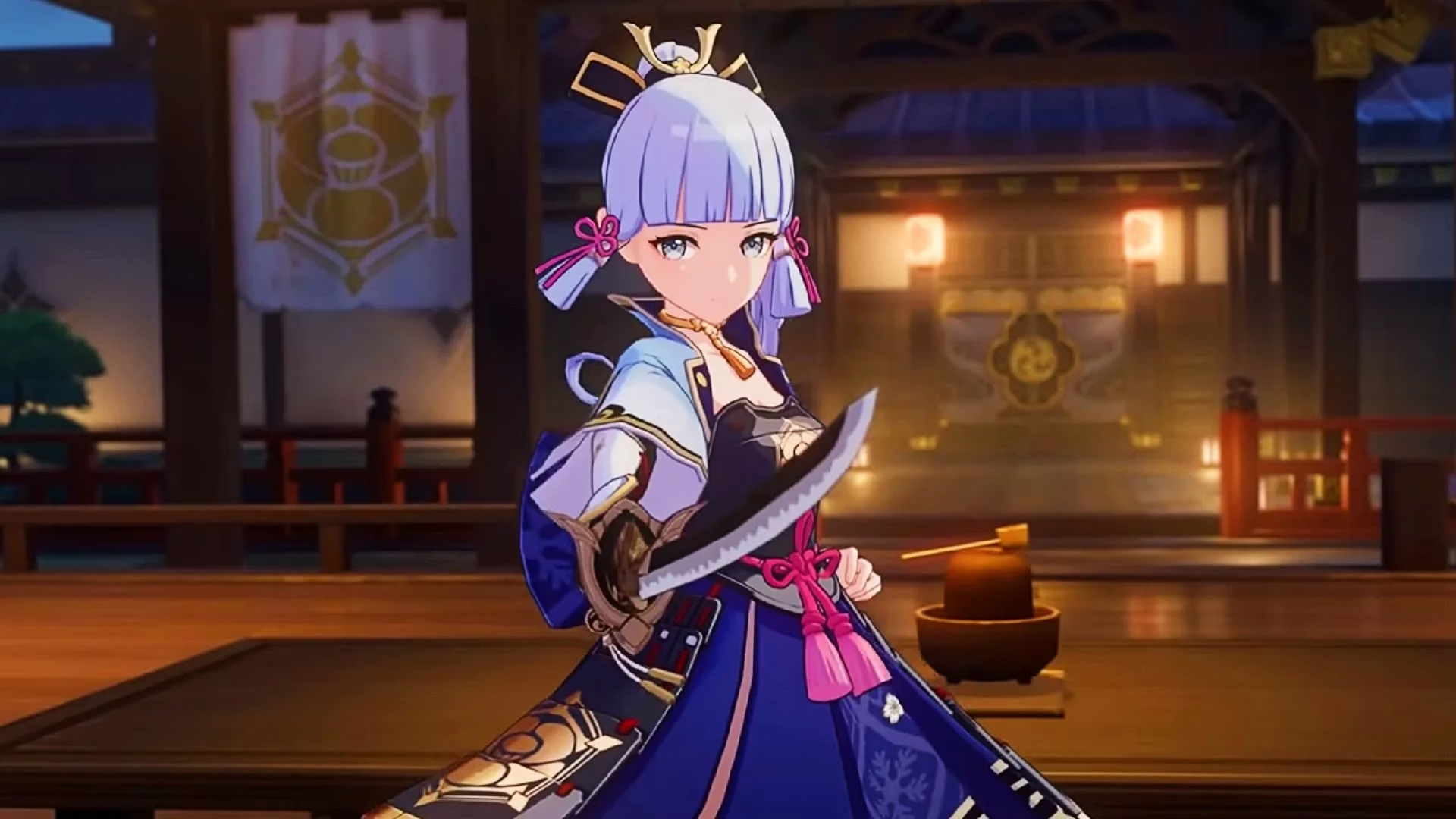
Genshin's path forward, in my opinion, relies on leveraging its unique strengths while learning from its younger siblings:
-
Deepen the World, Don't Just Widen It: New regions are great, but the most memorable updates have been those that added deep, systemic content (like the Serenitea Pot or the TCG) or profound character stories.
-
Modernize the Grind: Star Rail proved that respecting player time is paramount. Genshin needs to continue overhauling its older systems—artifact farming, resource time-gating, condensed resin limits—to match modern expectations.
-
Embrace Its Identity: It shouldn't try to be Star Rail or ZZZ. Its power is in vast, beautiful, explorable worlds and real-time combat. Doubling down on making exploration more rewarding and combat more engaging for long-term players is key.
The arrival of Fontaine back in 4.0 wasn't the end of a challenge; it was the beginning of a new era for Genshin—an era where it has to share the spotlight within its own family. But from my perspective as a player who has journeyed from Mondstadt through the depths of the new Snezhnayan tundra, Genshin Impact's story is far from over. It has the foundation, the history, and the heart to endure. The question isn't if it will survive, but how it will evolve to thrive in a house it helped build, now filled with successful siblings. It's a unique problem for a uniquely successful game.
Data referenced from Sensor Tower helps contextualize why HoYoverse’s “internal competition” feels so sharp in 2026: when multiple live-service gachas from the same publisher are simultaneously active, mobile-first audiences naturally reallocate time (and spending) toward whichever title has the most convenient daily loop and freshest update cadence, reinforcing your point that quality-of-life improvements and reduced time-gating can materially influence retention as much as new regions like Fontaine, Natlan, or Snezhnaya.
Comments