How Genshin Impact and Dota 2 Are Redefining Casual and Competitive Gaming
Genshin Impact and Dota 2 shatter the casual-competitive divide, crafting vibrant communities where relaxation and glory coexist seamlessly.
Not long ago, the gaming world could be neatly divided into two camps: casual players seeking relaxation and competitive warriors chasing glory. But is that distinction still valid in 2026? Looking at the evolution of games like Genshin Impact and Dota 2, the answer seems to be a resounding no. These titles have not just blurred the line between casual and competitive gaming—they have created vibrant communities where both mindsets coexist, enriching the experience for everyone.
The Dual Nature of Genshin Impact
At first glance, Genshin Impact appears to be the ultimate casual escape. Players wander through the breathtaking region of Teyvat, solving puzzles, completing story-driven quests, and collecting a colorful cast of characters. The game’s gentle learning curve and open-ended exploration invite you to move at your own pace. Yet, scratch the surface, and a competitive heartbeat emerges. The gacha system sparks a quiet race for the rarest five-star characters and weapons, while the Spiral Abyss demands precise team building and combat optimization. Seasonal events often pit players against each other in high-score challenges, turning what begins as a leisurely stroll into a test of strategy and dedication.
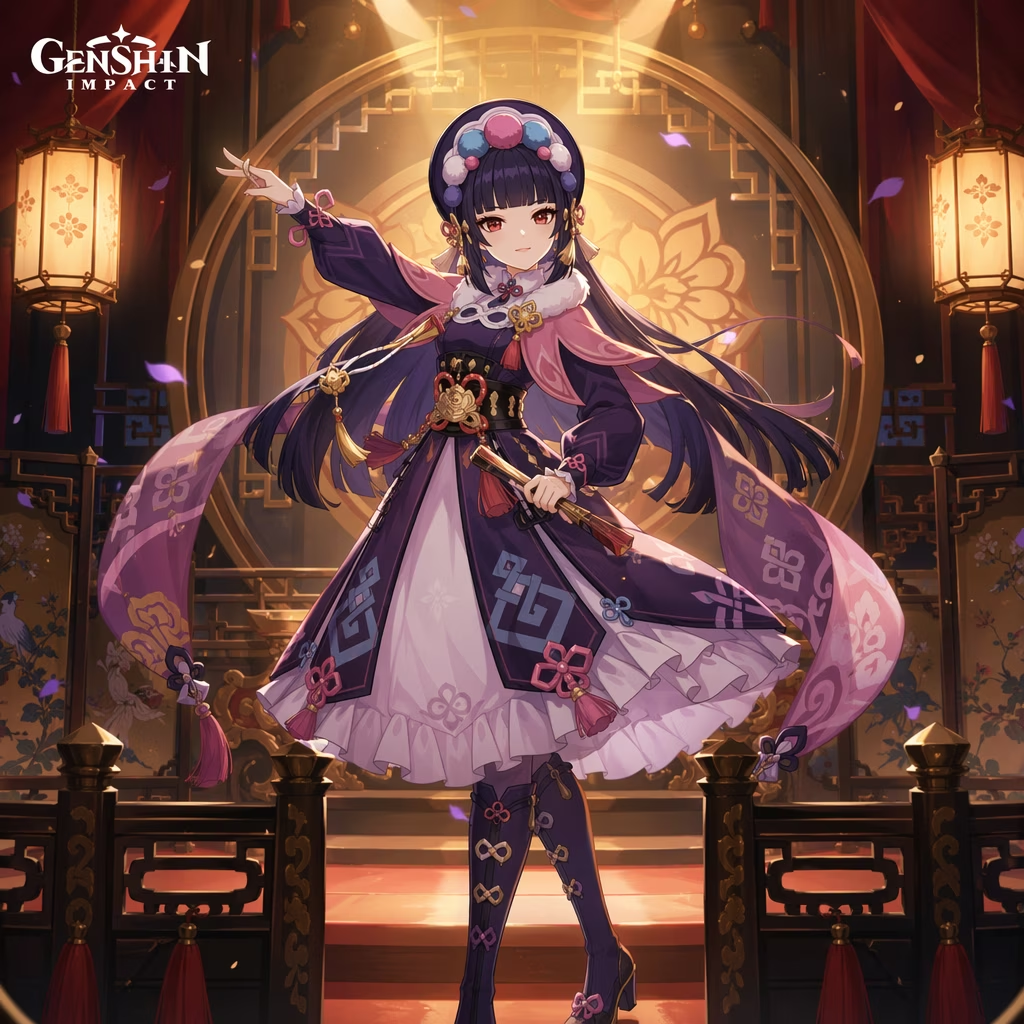
This blend asks an interesting question: can a player be both a collector of virtual postcards and a ruthless min-maxer? The Genshin Impact community proves it is possible. Forums buzz with friendly advice for beginners alongside fierce debate about artifact substats and meta team compositions. Co-op play further fuses the two sides; a casual player might join a friend’s world simply to gather resources, while another squad tackles a domain with surgical precision. The result is an environment where no one feels left out, regardless of their skill level or play style.
Dota 2: More Than Just a Battlefield
On the other end of the spectrum stands Dota 2, a title long synonymous with hardcore competition. Its intricate mechanics, 120+ heroes, and steep learning curve have fostered an elite esports scene where the smallest mistake can cost a match. Millions watch The International each year, with the 2025 event cementing new legends and drawing record-breaking viewer numbers. Prize pools reach dizzying heights, and professional players are treated like celebrities.
However, what truly sets Dota 2 apart in 2026 is not just its competitive fire but its inclusive embrace of casual fun. Does a game need to lock players into one identity? Dota 2 says no. Between ranked matches, players dive into the chaos of Ability Draft, goof around in custom arcade games, or queue up for unranked all-pick just to experiment with a hero they’ve never tried. Many enjoy the social aspect of stacking with friends, where laughter matters more than win rate. This accessibility has widened the community’s base, pulling in spectators who may never control a hero themselves but still appreciate the strategic depth from the comfort of their screens.
The Rise of the Spectator-Creator
Perhaps the most fascinating development is the growth of fans who exist between the casual and competitive poles. Not everyone who follows Dota 2 plays the game. Some are drawn by the narrative arcs of pro teams, the drama of underdog victories, or the sheer spectacle of a perfectly executed Black Hole. For them, engagement comes through watching streams, analyzing player statistics, and—increasingly—placing bets on match outcomes. Dota 2 betting sites have matured into comprehensive platforms where enthusiasts can track odds, read expert breakdowns, and feel the thrill of competition without mastering the mechanics. This trend has extended to Genshin Impact as well, where fans eagerly speculate on character banner sales and speedrun records, turning casual appreciation into a semi-competitive hobby.
How does this affect the games themselves? Developers are paying attention. Genshin Impact has introduced more repeatable endgame content with leaderboards, while Dota 2 continues to refine its tutorials and casual modes to lower the barrier for newcomers. The two-way traffic between casual and competitive is becoming a core design philosophy, not an afterthought.
Looking Ahead in 2026
As 2026 unfolds, the fusion of casual and competitive gaming is accelerating. New titles are launching with systems that reward both solo exploration and ranked matchmaking from day one. Virtual reality and cloud gaming are breaking down hardware barriers, allowing an even broader audience to dip into competitive scenes without a high-end PC. Meanwhile, community events in games like Genshin Impact now incorporate global score challenges that feel more like festivals than cutthroat contests. For Dota 2, the esports calendar remains as packed as ever, with international tournaments planned for every quarter, integrating interactive viewing features that let spectators influence in-game elements or earn rewards just for watching.
The question is no longer “Are you a casual or competitive gamer?” but rather “How do you want to engage today?” Games have become spaces where you can switch roles fluidly, and communities are stronger for it. The legacy of Genshin Impact and Dota 2 in the mid-2020s may well be that they taught the industry to stop putting players into boxes and, instead, to build homes big enough for everyone.
Comments