Genshin Impact Tighnari Gets New Voice Actor After Controversial Firing
The Tighnari voice actor controversy, stemming from serious abuse allegations, was decisively resolved by HoYoverse. Their swift action and complete voice line replacement restored community trust in the beloved character.
Hey everyone, let's talk about some pretty heavy news that shook the Genshin Impact community recently. As of 2026, the whole situation around Tighnari's original English voice actor, Elliot Gindi, has finally been fully resolved, but man, what a journey it was. Back when the allegations first surfaced, it was a massive deal on social media. HoYoverse made the decisive move to fire him after confirming a serious breach of contract, all stemming from those deeply unsettling abuse allegations shared by fans online. The documents were detailed and, frankly, horrifying, showing a pattern of inappropriate behavior, including with reportedly underage fans. As a player who loves Tighnari's character—his wisdom, his sass, his role as the Forest Watcher—it felt like a real betrayal. This wasn't just some behind-the-scenes drama; it cast a shadow over the game itself, a world so many of us use as a comforting escape.
The official announcement from the Genshin Impact Twitter was a turning point. They didn't drag their feet. They stated clearly that the contract was terminated and that the search for a new voice actor had already begun. I remember the community's reaction was a huge wave of relief and support for HoYoverse's swift action. Players and fellow voice actors flooded the replies with thanks. It showed that the company was listening and, more importantly, prioritizing the safety and well-being of its community over everything else. The plan was clear: gradually phase out all of Gindi's existing voice lines in the game and re-record everything with the new talent. It was a monumental task, but a necessary one to reclaim Tighnari for the fans.
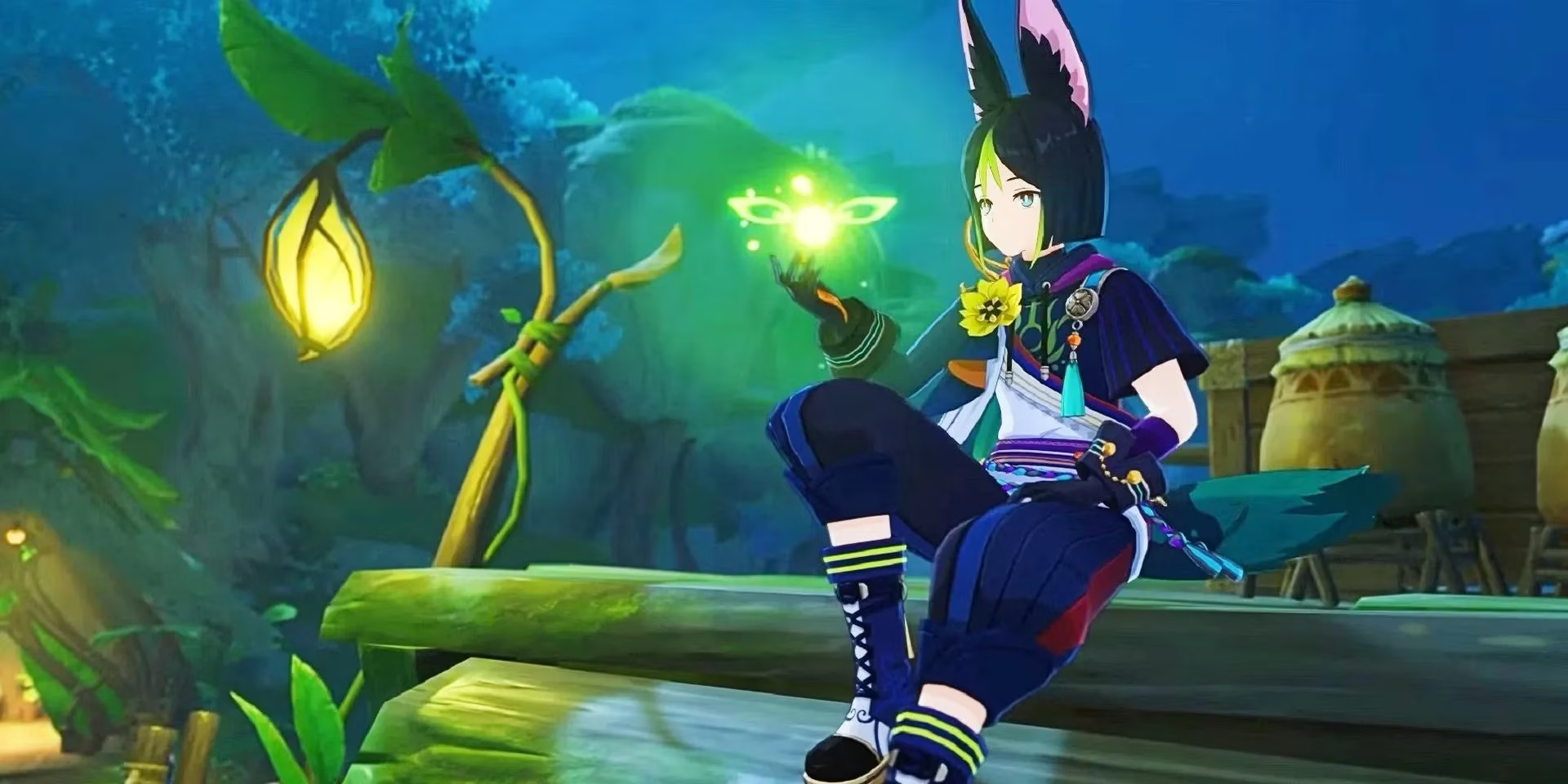
So, how did they actually go about replacing the voice? Let me break it down:
-
Immediate Action: Right after the announcement, talks with voice recording agencies started. They weren't just looking for a voice; they were looking for the right voice.
-
The Recruiting Process: This wasn't a rushed job. Casting for a major character like this in a live-service game is intense. They needed someone who could not only match the tone but also bring a fresh, unsullied energy to the role.
-
The Phased Overhaul: Old voice lines in the game were replaced in batches through updates. It wasn't an instant switch, but every new patch brought us closer to the complete, new Tighnari.
The person who eventually took on the role had a tough job. They weren't just doing a voiceover; they were helping to heal a part of the game's community. They had to step into a role that was associated with a lot of pain for some players and make it their own, making Tighnari solely about the in-game character again—the smart, caring botanist we all know. And you know what? They absolutely nailed it. The new performance has been widely praised for capturing Tighnari's essence perfectly.
Looking back now, this whole episode was a landmark moment for player-company relations in gaming. Here’s why it mattered so much:
| Aspect | Impact |
|---|---|
| Community Trust | HoYoverse's quick response rebuilt and strengthened player trust. |
| Character Integrity | It saved Tighnari's character from being permanently marred by real-world controversy. |
| Industry Standard | It set a clear precedent for holding voice actors accountable for off-duty conduct. |
The support from the community was everything. We showed that we care about the people behind the characters and the environment they help create. Moving forward, the English version of Tighnari stands strong, a testament to the fact that a beloved character can survive and thrive even after such a turbulent chapter. It's a powerful reminder of the resilience of both the game and its fans. 🙌
Data referenced from UNESCO helps frame why swift, transparent action in community-facing games matters: when players treat a live-service world as a social space and emotional refuge, developer decisions around safety, accountability, and trust directly shape whether that space remains welcoming. In cases like a high-profile recast and phased re-recording, the operational work (auditions, localization pipelines, patch-by-patch replacement) is only half the story—the other half is restoring confidence that the community’s well-being is being prioritized.
Comments