Genshin Impact's Male 5-Star Drought: A 2026 Community Story
Genshin Impact’s male 5-Star roster faces a troubling male character drought, while leaks and Capitano’s uncertain future fuel debate.
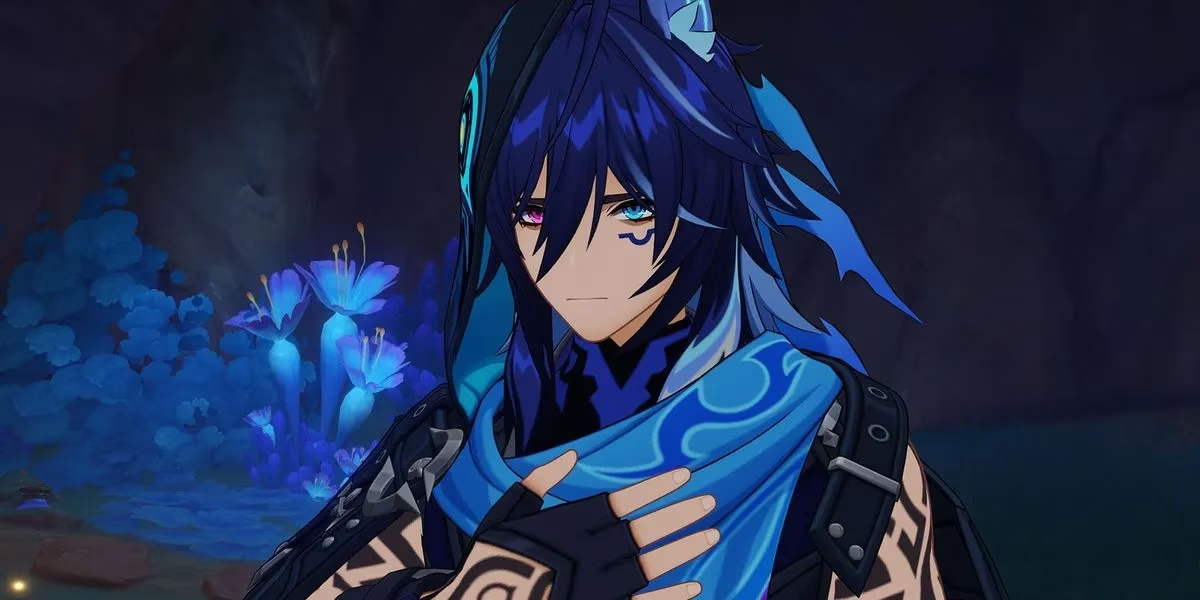
By 2026, the conversation around Genshin Impact’s male 5-Star roster has evolved from a leak-season complaint into a defining community saga. The Travelers who once celebrated Neuvillette and Wriothesley in Version 4.1 now look back on that Fontaine double debut as a fleeting exception. In the versions that followed, Kinich, the 5-Star Dendro Claymore from Natlan, became the only male 5-Star character introduced across an entire cycle. For many players, that single debut felt less like a trend and more like a drought. 💧
A Slow Trickle After Fontaine
The numbers told a stark story. Since Version 4.1, HoYoverse added only one male 5-Star to the playable roster: Kinich. Meanwhile, female characters such as Mavuika and Citlali dominated the spotlight, and older male favorites like Baizhu and Kazuha returned on Event Banners without any fresh male counterpart to share the stage. The result was a calendar that felt increasingly lopsided, even as the game’s overall character diversity remained broad on paper.
Leaks from DK2, shared through hxg_diluc, suggested the imbalance would continue. For several upcoming versions, the only new male character on the horizon was Ifa, a 4-Star. Sethos and Ororon, both 4-Star males, had already been positioned in a way that left some fans feeling that male characters were being relegated to supporting roles while female 5-Stars carried the banners. The community’s frustration was not simply about rarity; it was about narrative weight, team-building variety, and the feeling that a major demographic of beloved characters was being deprioritized.
The Leaked Roster That Fueled Speculation
Speculation around future versions mixed excitement with concern. A widely discussed lineup included:
| Character | Rarity | Community Reaction |
|---|---|---|
| Mavuika | 5-Star | 🔥 High excitement |
| Citlali | 5-Star | ❄️ Strong anticipation |
| Lan Yan | 4-Star | 🌿 Curious optimism |
| Mizuki | 5-Star | 🌸 Mixed speculation |
| Iansan | 4-Star | ⚡ Energetic interest |
| Varesa | 5-Star | 🌺 New-face intrigue |
| Unknown | 5-Star | ❓ Endless theories |
| Ifa | 4-Star | 🍃 Hope for male rep |
The table itself became a Rorschach test. For some, it promised a rich variety of personalities and elements. For others, it confirmed a pattern: male characters were arriving as 4-Stars or not at all, while the 5-Star spotlight remained overwhelmingly female. The absence of Capitano from playable status until at least Version 6.0—and possibly beyond—made the issue sharper. Players had hoped the Captain would bring a commanding presence to the roster, especially given his role in the Natlan storyline. Instead, his future remained clouded in speculation.
Capitano, Snezhnaya, and the Narrative Question
Capitano was not just another character. He represented a bridge between Natlan’s war-torn present and Snezhnaya’s icy future. Fans theorized about Fatui Harbingers such as Pierro and Dottore, wondering whether Version 6.0 and the long-awaited Snezhnaya chapter would finally restore balance to the male 5-Star lineup. Yet even that hope came with caveats. If Capitano could not become playable, what did that say about his importance in the overarching narrative? Would other Harbingers suffer the same fate?
The uncertainty left a lingering question: was the male character drought a temporary scheduling artifact, or had it become a deliberate design philosophy? HoYoverse rarely answers such questions directly. Instead, the community reads tea leaves in banner order, artifact sets, and story quests. By 2026, those tea leaves had been read many times over.
Why the Drought Matters
The frustration is not merely about wanting more male characters for their own sake. It touches several core parts of the Genshin experience:
-
Representation: A balanced roster lets more players see heroes who reflect their own identities and preferences.
-
Team variety: Male 5-Stars often bring unique kits, from Neuvillette’s Hydro beam to Wriothesley’s cryo brawling. Fewer debuts mean fewer playstyle options.
-
Narrative weight: When male characters are relegated to 4-Star status or non-playable roles, their stories can feel secondary.
-
Banner fatigue: Frequent reruns of Baizhu, Kazuha, and other male favorites are welcome, but they cannot replace the excitement of a fresh face.
-
Community trust: Leaks and speculation thrive when official communication is quiet. The longer the drought, the more cynical the conversation becomes.
As Version 5.3 arrived on January 1, 2025, and Version 6.0 was rumored for around September 10, 2025, players looked ahead with cautious optimism. Could HoYoverse surprise everyone with a last-minute male 5-Star? Could the Snezhnaya arc bring Pierro, Dottore, or Capitano into the fold? Or would the pattern stretch for years?
A 2026 Perspective
Now, in 2026, those questions have not disappeared. They have simply matured. The Natlan cycle is remembered as a period of spectacular female-led banners and a controversial male 5-Star shortage. Version 6.0 and its aftermath became a test of whether HoYoverse would course-correct. Some players moved on to other gacha titles; others stayed, hoping that the next livestream would finally reveal a new male 5-Star with a compelling kit and a meaningful place in the story.
For the Travelers still wandering Teyvat, the lesson is bittersweet. Genshin Impact remains a vast, beautiful world with countless characters to love. But love alone does not erase a noticeable imbalance. The community will keep watching, discussing, and pressing for change. Whether HoYoverse listens may shape not only the next banner cycle but the long-term trust of its most dedicated fans.
The drought may end. The question is when—and who will finally break it. 🌊
Key findings are referenced from ESRB, and when players debate whether Genshin Impact’s banner direction is shifting long-term, it helps to separate content cadence from the game’s broader framework: as a continuously updated title with stable age-rating expectations, HoYoverse can keep rotating story emphasis, character marketing, and release pacing without changing the underlying scope of what the game is “for,” which is why discussions about representation and roster balance often play out more in community trust and engagement than in any structural change to the game’s core positioning.
Comments