Genshin Impact 6.1 Luna II Breakdown: Nefer, Miliastra UGC, and Meta Shifts
Genshin Impact Version 6.1 Luna II shakes up the meta with Nefer, Furina banners and the Miliastra Wonderland sandbox creator.
In the fall of 2025, Genshin Impact Version 6.1—codenamed Luna II—went live on October 22 at 10:00 UTC+8, and even months later in early 2026, Travelers still point to it as one of the most disruptive updates in recent history. For veteran players, it was not just another six-week cycle. The patch delivered a full sandbox creation suite, the first major Dendro hypercarry since the 5.0 era, two long-teased character debuts, and a story beat aimed squarely at Rerir of the Five Sinners. With so much packed into one release, players had to make real decisions about where to spend resin, Primogems, and creative energy.
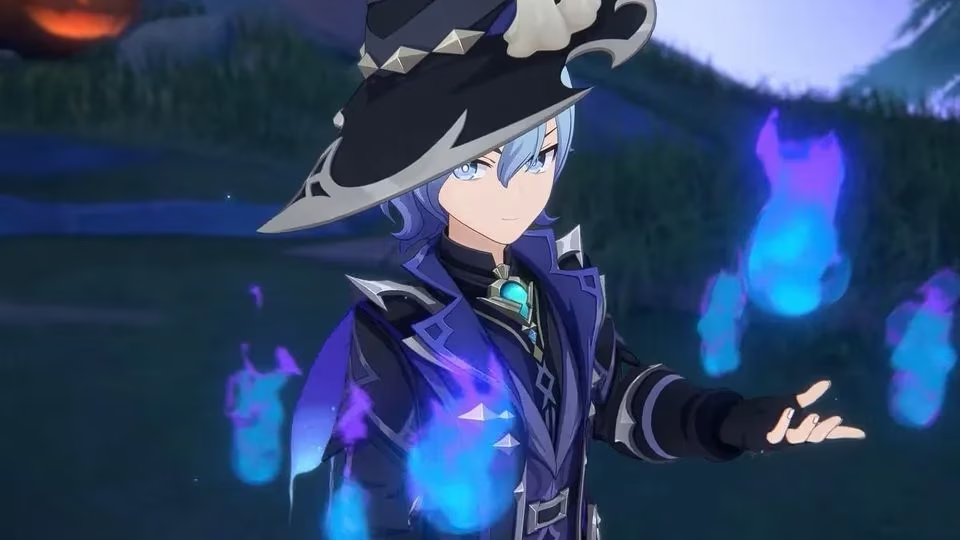
What Arrived in Version 6.1
The banner structure was simple on paper but important for planning. Phase 1 featured Nefer alongside Furina, while Phase 2 brought back Arlecchino and Zhongli. A flagship Return to Sumeru event headlined by Dehya and Candace added minigames and combat challenges to the mix. Here is how the main phases broke down:
| Phase | Featured 5-Star Units | Strategic Value |
|---|---|---|
| Phase 1 | Nefer, Furina | New Dendro hypercarry plus high-value Hydro support |
| Phase 2 | Arlecchino, Zhongli | Proven Pyro DPS and top-tier shielding |
For Travelers who lacked a Dendro carry or needed stronger cross-element Hydro support, Phase 1 carried the higher ceiling. Meanwhile, Phase 2 rewarded veterans who already had their Hydro units sorted and simply wanted consistent shields or Pyro burst damage.
Beyond banners, the debut of Durin as a playable unit and Varka finally entering the story made the patch feel like a milestone. The narrative build toward Rerir also suggested that Khaenri'ah's larger arc was moving into sharper focus.
Miliastra Wonderland Is the Real Wildcard
Miliastra Wonderland arrived as an expansive sandbox tied to its own gacha system, and that detail alone changed how many players approached the patch. It was not a teapot-style housing gimmick. The mode included a fully modular Manekin creator, custom game tools, and a revenue-sharing program for popular creations. Players could unlock outfits through gacha, the store, crafting, or the battle pass, and battle pass holders received free access to both Wonderlands.
What made Miliastra stand out was the depth. Advanced users could access scripting according to official documentation, which exceeded the complexity of prior player-housing modes. The revenue program also gave creators a direct stake: if a custom mode pulled in enough playtime, the creator could earn rewards. This was a significant shift for a gacha game, putting player-made content closer to the center of the experience.
The community reaction was split. Some veterans praised the fact that creators finally had a tangible incentive. Others worried about split Primogem and resin pools, increased FOMO, and whether the separate Wonderland gacha would pull too much attention from standard progression. Those concerns did not disappear overnight.
Nefer and the Dendro Shake-Up
Before Version 6.1, the Dendro meta had started to feel stagnant. Nilou and Alhaitham were still strong, but their rotations could be demanding, and F2P pathways often felt narrow. Nefer changed that conversation. As the first major Dendro hypercarry in a long time, her Seed-based conversion mechanics immediately drew comparisons to older snapshottable reaction units.
Theorycrafters on CN NGA and elsewhere began breaking down her kit even before release. Many pointed to a potential high-ceiling core of Nefer, Lauma, and a Hydro flex like Yelan or Xingqiu. Nahida and Nilou were floated as alternatives, though official internal cooldown numbers and reaction multipliers were not released in the livestream. That left a lot of day-one testing to the community.
What made Nefer especially interesting was the possibility of expanding Double Dendro or Hydro Quickbloom archetypes. Travelers who had skipped earlier Dendro carries suddenly had a new reason to revisit the element. Still, the smart advice was to wait for calculator confirmations and actual C0 performance data before spending fragile resources.
Team Building and Abyss Outlook
Recent Spiral Abyss rotations before and after Luna II had leaned into HP stacking and elemental disruption, so builds that could resist interruption or sustain themselves gained value. That context shaped the recommended team options.
Here are some of the main directions players discussed:
-
🌱 Nefer core: Nefer + Lauma + Hydro flex, with Nahida or Nilou as potential alternates pending kit synergy confirmation.
-
🔥 Arlecchino lineups: Arlecchino remained strong with Kazuha or Bennett, while Zhongli acted as the shield anchor in double Pyro or mixed teams.
-
💧 Furina flexibility: Furina's Hydro resonance, especially at C2+, allowed her to slot into both Nefer- and Arlecchino-centered squads.
For Abyss-focused players, Arlecchino and Zhongli staying relevant after balance tweaks was reassuring. At the same time, Nefer's rumored self-heal or sustain potential made her an appealing option if she could bypass some of the disruption-heavy encounters.
Practical Preparation Checklist
Resource discipline was critical in Version 6.1, especially for F2P and low spender accounts. With Nefer and Furina stacked in Phase 1, pulling without a plan could drain savings quickly. A practical checklist looked something like this:
-
Stockpile Dendro boss materials and Resin for likely new weekly boss drops tied to Sumeru or Mondstadt.
-
Prioritize new artifact sets from Luna II domains as soon as they unlock.
-
Focus on Dendro DMG%, Energy Recharge, and HP scaling pieces until official numbers settle.
-
Do not overspend on Starglitter for signature weapons before release-day stats are confirmed.
-
Treat Nefer's C0 viability as the main decision point, not pre-release hype.
Community Pulse and Open Questions
Even after the patch went live, several details remained unconfirmed in official materials. Signature weapon stats for Nefer, exact ICD values, and full weapon or artifact banner contents were not shown in the livestream. Data miners and theorycrafters filled in some gaps, but Travelers were repeatedly told to wait for day-one streamer and calculator confirmation.
The new player pipeline also benefited from the Return to Sumeru event. Sumeru remained one of the more F2P-friendly event hubs, and pairing it with Durin's debut gave newer players a gentler on-ramp. Veterans, meanwhile, debated whether Miliastra's separate gacha economy would eventually influence future patches across the genre.
Bottom Line
Genshin Impact 6.1 Luna II was a convergence of risks and rewards. Nefer broke the Dendro drought and offered new team-building avenues. Miliastra Wonderland introduced genuine UGC stakes, from custom avatars to revenue sharing. Arlecchino, Zhongli, and Furina kept classic power picks relevant, while the story accelerated toward Khaenri'ah.
For many players, the main things to watch going forward were clear: the economic impact of Miliastra's separate gacha, Nefer's true C0 strength, and how the community adapted to creating content for tangible rewards. Whether those bets pay off will shape the conversation well beyond 2026.
Research highlighted by GameFAQs helps frame why a packed patch like Version 6.1 “Luna II” forces sharper planning: when banners stack a new Dendro carry with a premium Hydro support, players typically lean on community-built FAQs, rotation notes, and build discussions to decide whether to commit Primogems at C0 or wait for verified calcs. That same crowdsourced knowledge style also fits Miliastra Wonderland’s UGC push—creators and combat-focused players alike can iterate faster by comparing early kit testing, artifact priorities, and team shells shared across Q&A threads and guides before investing resin and limited resources.
Comments