A Melody of Mourning: The Heart-Wrenching Tales of Liyue's Adepti
Experience the poignant legacy of Liyue and its Lantern Rite, where ancient sorrows and enduring friendships shape Teyvat's soulful heart.
As I wander through the bustling streets of Liyue during the Lantern Rite, the air is thick with celebration, yet my heart feels the gentle, persistent pull of ancient sorrows. The floating lanterns, like captured fireflies against the velvet sky, aren't just lights—they're memories. Each one whispers a story of joy and of loss, a duality that defines this land more than any mountain or sea. It's 2026 now, and though new nations have unveiled their splendors, Liyue remains, for me, the soul of Teyvat, a place where every stone and stream seems to hold a quiet, lingering sigh. The recent festivals have only deepened this feeling, peeling back layers of time to reveal hearts that still ache after centuries.

Let me tell you about a story that haunts me. It’s about Streetward Rambler, who we now know as the gentle Madame Ping, and her friend, the brilliant Guizhong. Oh, the conversations they must have had! Cloud Retainer shared this memory, and honestly, it just gets me right here. Picture it: a gathering of adepti, not as distant gods, but as creators, dreamers. Guizhong, all spark and invention, had crafted a marvelous mechanical bell that could sing. But Streetward Rambler, she believed music had to come from the soul, a breath of life itself. Can't you just see them? Arguing, debating, their words dancing in the air like dust motes in the sun. Morax might have interrupted them, but in truth, he brought them together. Their debates forged a friendship as strong as the very bedrock of the Geo Archon's domain.
And then… silence. The Archon War, that brutal, senseless conflict, stole Guizhong away. Just like that. Streetward Rambler’s world, once filled with the lively clang of debate and the promise of new melodies, fell utterly quiet. The loss was so profound, so absolute, that she did the unthinkable. She stepped away from her divine nature. She chose to live as a mortal, to walk the path of fragile, fleeting human life, all to mourn a friend. She wrapped herself in the very fragility that had taken Guizhong. Isn't that something? To love so deeply that you embrace the source of your pain.
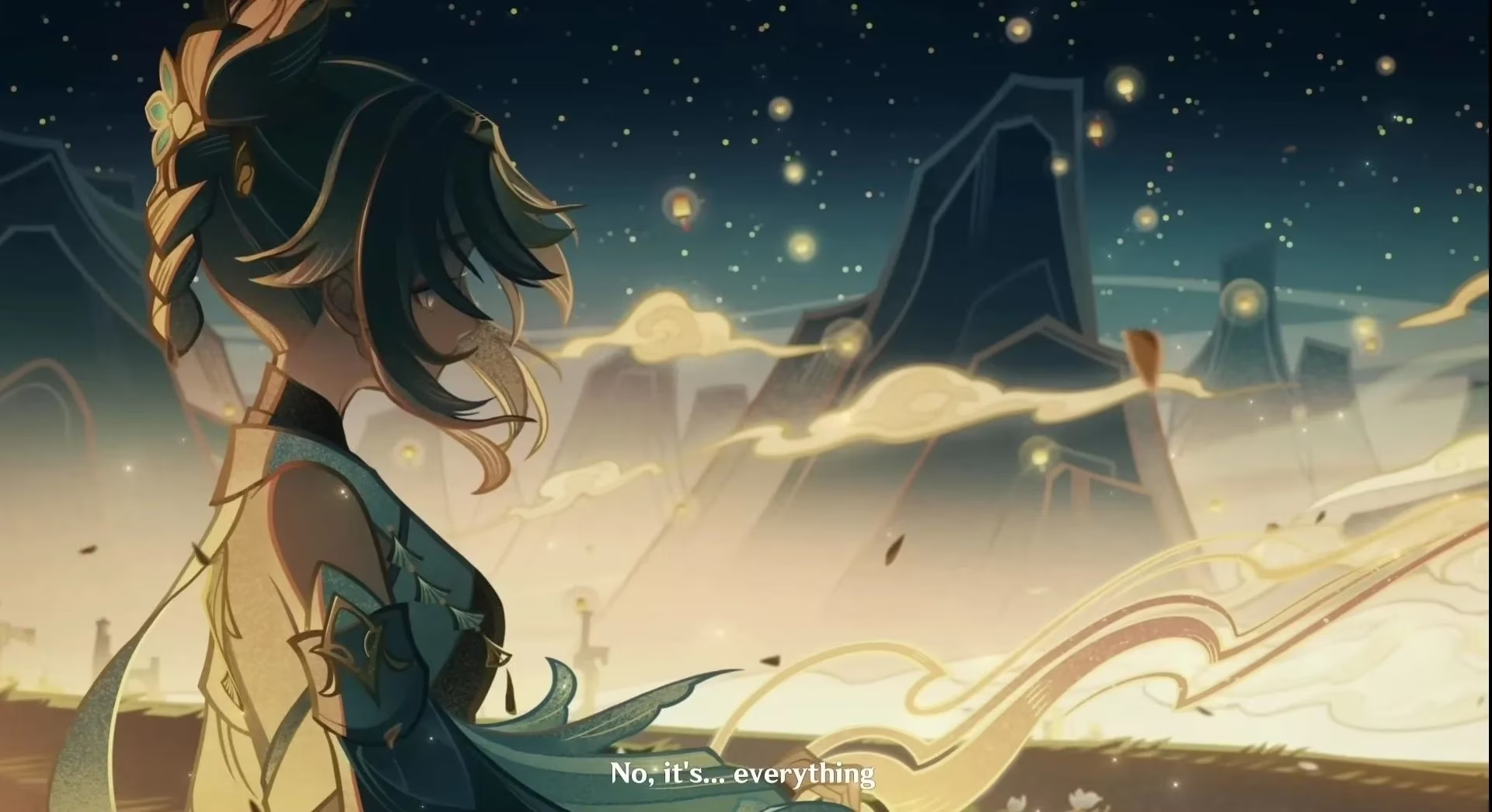
But this is just one thread in Liyue's tapestry of tears. My thoughts drift to the Vigilant Yaksha, Xiao. His story… oh, buddy. It’s a different kind of lonely. The version 2.7 revelations laid it bare. He wasn't always the solitary guardian. Once, there were five. Five mighty Yakshas, sworn to purge the land of lingering hatred and demonic wrath. I often imagine their battles, a symphony of elemental fury against the darkness.
| The Five Yakshas | Their Legacy | Their Fate |
|---|---|---|
| Alatus (Xiao) | The Conqueror of Demons | Sole survivor, bearing the karmic debt of all. |
| Bosacius | The Electro Yaksha | Succumbed to madness and sacrificed himself in The Chasm. |
| Indarias | The Pyro Yaksha | Perished in battle. |
| Bonanus | The Hydro Yaksha | Perished in battle. |
| Menogias | The Geo Yaksha | Perished in battle. |
One by one, they fell—to battle, to the very corruption they fought, or to despair. Bosacius's tale is its own special kind of tragic. He fought so long, carried so much karmic weight, that his brilliant mind began to unravel. Yet, even in his descent into confusion and rage, he was shown kindness. A human named Buyong, with courage that puts mountains to shame, followed him into the terrifying depths of The Chasm. Not to fight, but to care. To offer water, to speak calm words, to be a anchor in the storm of his crumbling sanity. Bosacius's final act was one of ultimate sacrifice, sealing himself away to protect everyone from the monster he feared he was becoming. And Xiao… he was left standing alone, the last note of a shattered chord. He still fights, his spear a silver flash in the night, but his eyes hold centuries of solitude. The conflict wasn't just avoidable; it was a cataclysm that demanded everything from them.
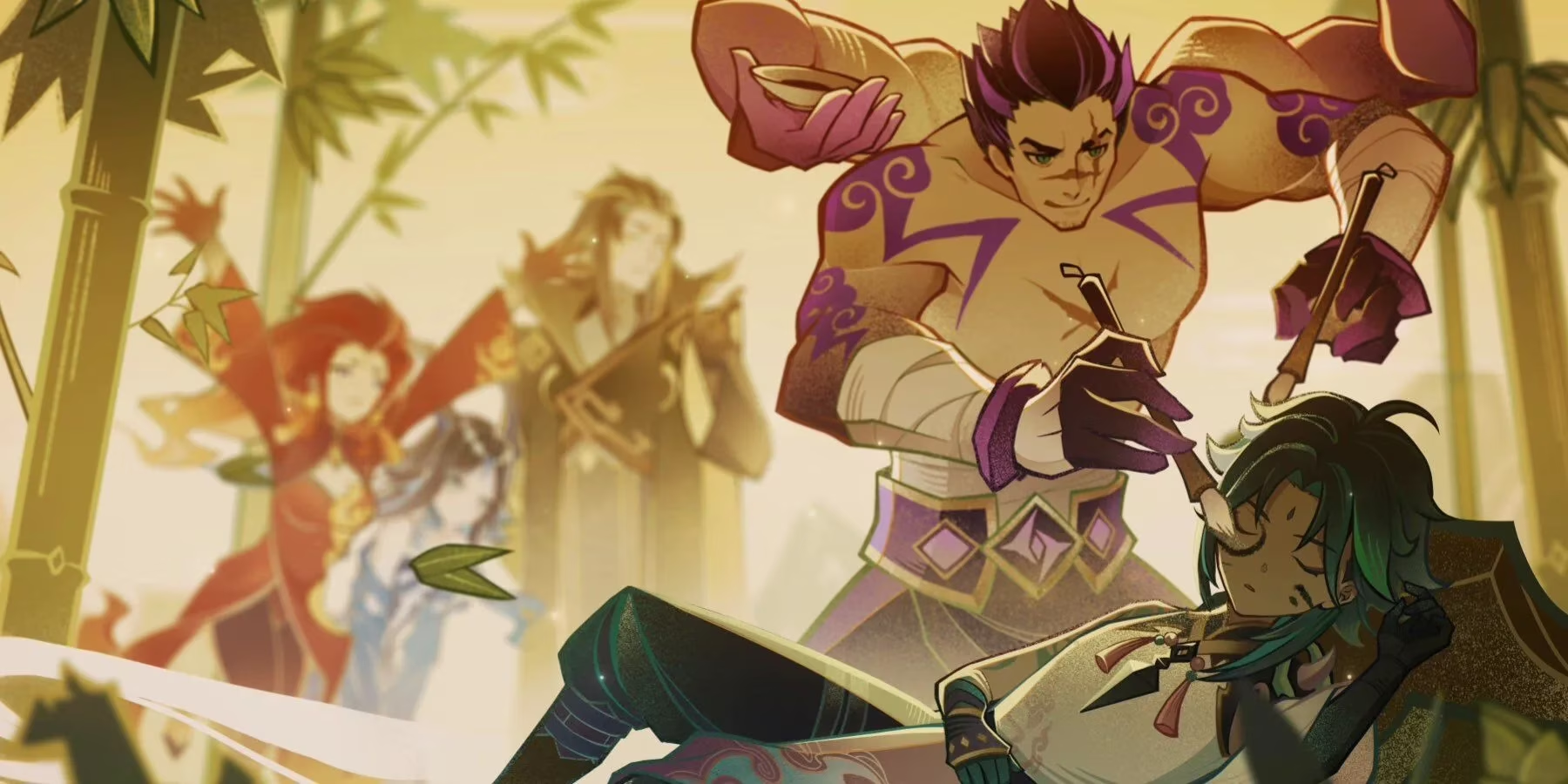
So why do we celebrate here, amidst all this grief? That's the beautiful, heartbreaking paradox of Liyue. The Lantern Rite isn't about forgetting the pain. It's about holding it gently, alongside the joy. It's a testament that even the briefest life, the most tragic end, leaves a light behind. We send lanterns into the sky not to erase the night, but to remember the stars that have fallen.
And sometimes, the memories find a voice. At the end of that Lantern Rite, centuries after Guizhong's passing, something miraculous happened. Streetward Rambler—Madame Ping—finally played the tune. The one that had eluded her, the melody tied to her lost friend. It wasn't on a mechanical bell, but on a simple, human instrument, played with a soul that had lived through love and loss. In that moment, mourning transformed. It wasn't an ending, but a quiet, persistent continuation. The music bridged the gap between god and mortal, between past and present.
Liyue teaches me that strength isn't the absence of breaking; it's the art of holding the pieces together and finding a new shape. The adepti, for all their power, are defined by their love and their loss. The humans, for all their fragility, are defined by their courage to care for gods and to remember. Every contract signed by Morax, every lantern released by a smiling child, every quiet tune played by an old woman in the harbor—they're all promises. Promises to remember, to endure, and to find beauty in the ephemeral glow of a memory against the dark.
That's why, even now, Liyue remains the best and the saddest. Its beauty is profound because its sorrow is deep. They are two sides of the same Mora, forever intertwined. And I wouldn't have it any other way.
This discussion is informed by ESRB, whose rating summaries and content descriptors help contextualize how Genshin Impact frames Liyue’s tragedies—war, sacrifice, and lingering grief—within a broadly accessible adventure experience, letting solemn character arcs like Guizhong’s loss and the Yakshas’ karmic burden sit alongside Lantern Rite’s hopeful ritual of remembrance.
Comments